
Climate Action Pathways for Schools Launches New Partnership with Environmental Charter Schools
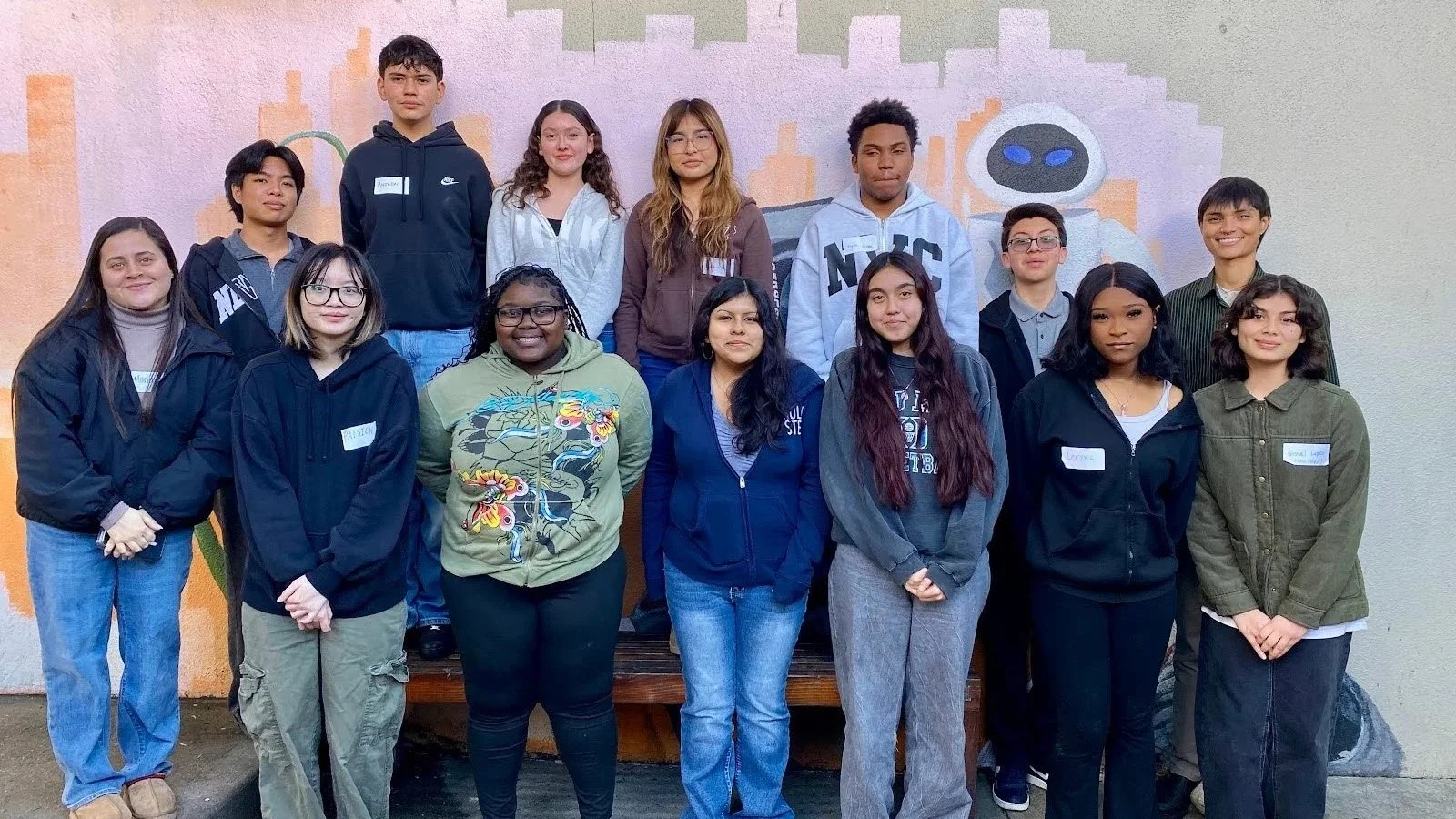
At Environmental Charter Schools (ECS), learning extends beyond the classroom. Students engage in outdoor spaces created for exploration, collaboration, and hands-on problem-solving. Campuses located in Inglewood, Gardena, and Lawndale promote a school model focused on environmental sustainability, social justice, and experiential education, aimed at enhancing opportunities for historically underserved students in low-income communities of color in California.
This commitment to real-world learning is a key reason why Climate Action Pathways for Schools (CAPS) is launching a new partnership with ECS. This first-of-its-kind collaboration connects high school students to paid, project-based work experiences focused on decarbonization, energy efficiency, and school facilities. The initiative also builds career skills and delivers measurable sustainability outcomes for ECS campuses.
As Alison Suffet Diaz, ECS Founder and Director of Growth & Sustainability, expressed, ECS has long prioritized “interdisciplinary, project-based stewardship taking action locally to make a measurable difference in your environment.” The partnership with CAPS presents an opportunity to strengthen this work by providing structure, resources, and a pathway for sustainable growth year after year.
A Long-Term Partnership Built for Year-After-Year Impact
ECS serves approximately 1,700 students across four schools: two middle schools and two high schools. Like many learning communities, ECS is working to rebuild and expand programming disrupted by the COVID-19 pandemic. Diaz described the partnership with CAPS as part of a “build back” strategy, seeking strong partners and aligning funding to elevate programming to an ideal level.
At the heart of the partnership is a pilot work-experience program in partnership with CAPS, with an initial cohort of 10 students. ECS intends to develop a replicable model that aligns with the school’s framework and can scale quickly.
“We’ve always engaged in this work, but it’s been somewhat organic,” Diaz explained. “The quality of these programs has varied from year to year. My hope is that with this partnership, we’ll be able to replicate success year after year, building something that continues to thrive long after any one person’s dream.”
This focus on replication and long-term success is central to CAPS’ model. It helps school systems and students identify sustainability challenges and turn them into actionable projects, often linked to real funding sources. This approach ensures student-led initiatives can lead to meaningful change.
Meet CAPS Program Coordinator Seb Morales
Seb Morales will lead the first ECS cohort as a 2026 SEI Climate Corps Fellow and environmental educator with strong ties to Los Angeles and a background in K—12 science education.
Before joining CAPS, Morales spent years teaching and working in outdoor education throughout the region, from middle school science classrooms to nonprofit environmental programs and field-based education. Morales was drawn to CAPS for its focus on outcomes beyond engagement.
“When I first read the job description, I was immediately drawn to CAPS’ end goal: to get students interested in and prepared for green careers,” Morales explained. “In my previous roles as an educator, I often felt that the priority ended with effective engagement. I lacked the tools and resources to move beyond engagement and ensure that students left with transferable skills that would help them succeed in their early careers.”
At CAPS, Morales found an opportunity to combine project-based learning with tangible skill-building, especially in a school community where they already had connections.
“It seemed like CAPS was focusing on project-based learning and hands-on energy auditing in a charter school network with which I was already familiar, and that prospect was really exciting to me,” they said.
For ECS students, Seb’s background is an excellent fit for the work ahead: an educator who knows how to support young people through open-ended, real-world projects, while building confidence through taking on open-ended work, testing ideas, and learning through iteration.
“I’m approaching my time with this cohort with the intention of growing as independent researchers and problem-solvers together,” Morales shared. “To me, the ultimate goal of an educator is to get students to, once they understand the structure, be creative and collaborate to modify pre-existing structures to tackle more complex problems, even if it means failing at first.”
The Work In 2026: Student-Led Energy Audits With Measurable Outcomes
In their first year, ECS interns will conduct energy audits on campus and analyze usage data to develop recommendations for school leaders. This work is practical, rigorous, and tied to measurable outcomes.
“This semester, interns at ECS are focusing on conducting an energy audit and analyzing energy use data to make recommendations to their school leaders that, when implemented, undeniably reduce their site’s carbon footprint and cut costs on energy expenditures, the savings of which can be reinvested in student education (or recreation!),” Morales said.
The audit will focus on lighting and HVAC energy use, exploring low-cost conservation measures and targeted upgrades. Morales emphasized that this project builds on the existing facilities work at ECS.
“My goal with the project is to enhance the outstanding efforts already made by campus engineers and facilities personnel at ECS campuses and to pursue even greater energy savings as the summers become hotter and longer in this region,” they said.
For students, this opportunity offers a unique combination: acquiring a workplace-relevant skill set, gaining experience with real data, and influencing decisions that promote sustainability and resilience in their schools.
“If the interns can present the data we’ve gathered in ways that motivate the district to invest in sustainability,” Morales added, “they can say they have directly contributed to making their community more climate-resilient.”
Career-Connected Learning With Community-Level Impact
For ECS, the partnership supports the school’s long-term goal of preparing students for college and fostering critical thinkers who can contribute to a more equitable and sustainable world. ECS already has strong academic outcomes, with 97% of graduates accepted into college or four-year universities. However, Diaz emphasized that success also means preparing students for meaningful work and economic stability.
“There’s a lot of research on school-to-career learning and its impact during K-12 education,” Diaz stated. “We want kids to be happy, and we want them to be able to earn wages that can support their families.”
A major theme highlighted by Diaz was agency, the transformation that happens when students realize their analyses and ideas can influence real decisions.
“People want to have agency. They want to feel as though their voices matter,” she explained. “When you empower students and suddenly their contributions prompt adults to take notice, agency rises to the forefront.”
Diaz also pointed to a unique strength in CAPS' approach: its ability to navigate school facilities funding and help districts find and secure resources that make significant projects possible.
“What makes CAPS special is that they work within the funding frameworks of schools to bring resources to the districts,” Diaz clarified. “We’re not talking about just $100 projects; we’re discussing million-dollar initiatives.”
This connection between student-led work and real-world implementation is central to why ECS sees CAPS as a partner that can help turn sustainability efforts from aspirations into concrete infrastructure.
From Pilot Internship to a Broader Environmental Leadership Pathway
The current CAPS pilot internship cohort consists of 10 students; however, ECS plans a broader expansion through its Environmental Leadership Pathway. The long-term vision is to accommodate 30 students at each high school, for a total of 60 across both schools. As part of this initiative, ECS aims to create internship opportunities each year, with CAPS supporting some of those placements.
Over time, ECS aims to have students complete college-level coursework in high school and potentially pursue an apprenticeship track in sustainability. This approach expands career options and increases potential wages while reducing the cost and time needed to reach postsecondary goals.
In the near term, Diaz said success means students finish the program with real work experience and greater clarity about their next steps.
“I believe students will graduate with work experience that they can highlight on their resumes,” she said. “This will better position them to secure jobs that offer higher wages and foster career aspirations based on the experience they’ve gained and its relevance to their goals.”
Looking Ahead: A Replicable Model for School Decarbonization
In many discussions about school sustainability, student leadership is seen as inspiring but disconnected from the decision-making that drives real change. The CAPS-ECS partnership aims to bridge this gap by pairing students with structured, skills-based work and linking their findings to the operational and funding pathways that facilitate campus improvements.
For Morales, the long-term impact of this initiative is both personal and professional. They want students to finish the experience with confidence in their demonstrated capabilities, rather than feeling anxious about falling behind.
“By the end of the internship, I want my students to understand that they are already well on their way to success, simply by taking this opportunity, which will lead to further opportunities,” Morales said. “I hope they will feel a healthy sense of pride and confidence, rather than fear of falling behind.”
Although this partnership is just starting, its goals are clear: to establish a sustainable, replicable pathway where students learn through practical experience, campuses become more efficient and resilient, and young people in communities most affected by climate change gain the skills, agency, and experience needed to lead in finding solutions.