
From Farm Waste to Fuel: CAPS Interns Explore Stanislaus County's Clean Energy Future
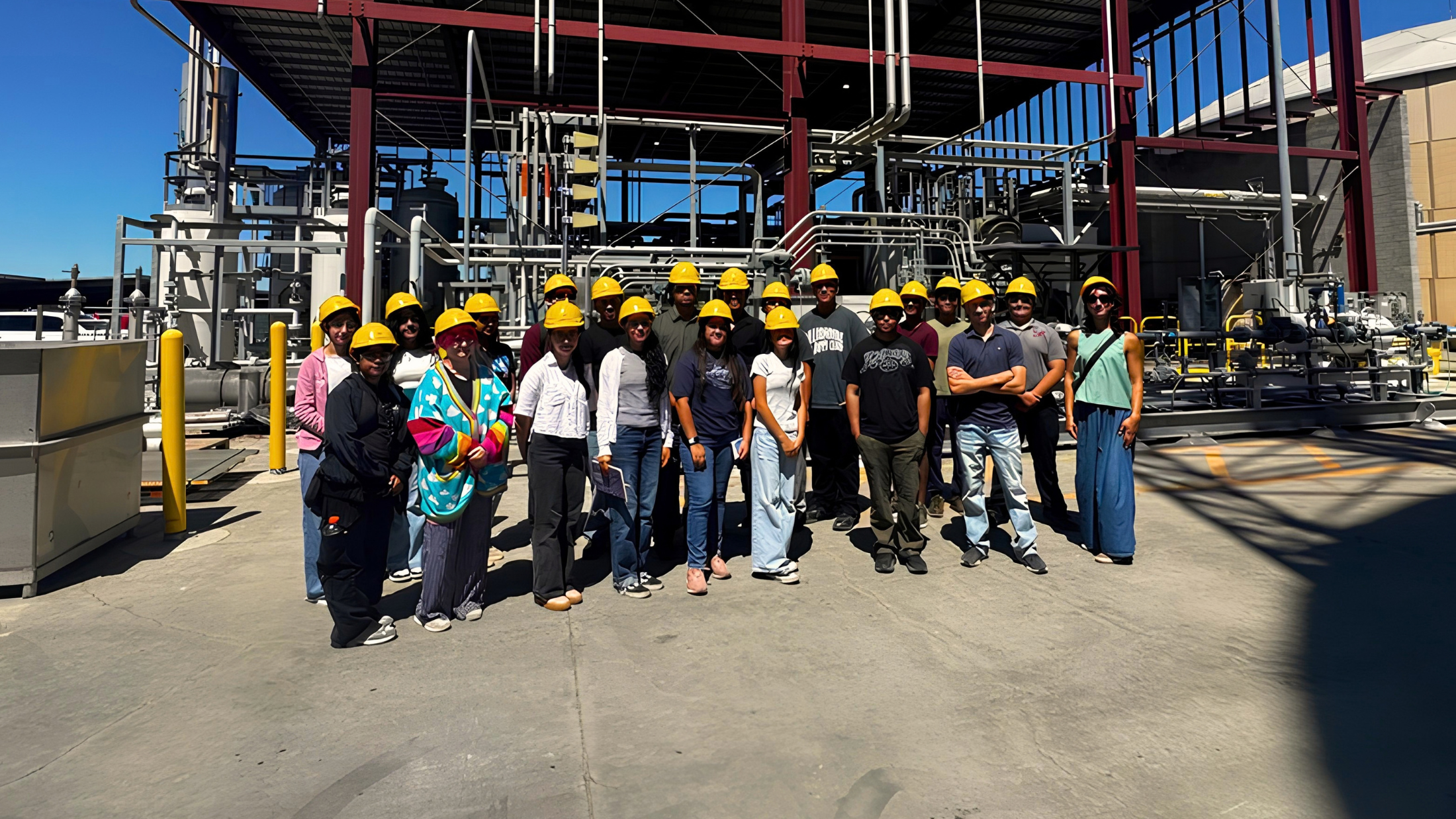
This summer, CAPS interns in Modesto got a hands-on look at the biofuels industry thanks to a daylong field trip with Aemetis, an advanced biofuels company. The field trip took students to several stops, including a dairy farm, biogas upgrading facility, and ethanol plant, where they saw firsthand how agricultural products and waste can be converted into renewable fuel—and met the many people and professions involved in making that transformation possible.
The experience gave students a closer look at how renewable energy connects to two of Stanislaus County's major economic sectors: agriculture and manufacturing. It also showed them the breadth and diversity of sustainability careers, and how, by bringing their creativity and passion to this work, they could become the next generation of leaders shaping its future.
Exploring the Future of Biofuels
Biofuels represent a growing sector of the clean energy economy, with innovation happening across agriculture, manufacturing, engineering, energy, and environmental science. For students interested in sustainability, understanding how these industries are evolving can help make potential career paths feel more tangible.
“In Stanislaus County, agriculture and manufacturing are huge economic sectors,” says Juli Miller, CAPS Program Manager. “For these students who are motivated by environmental efforts, exploring firsthand how sustainability is necessary to these sectors is eye-opening. Now they can see the potential in these careers.”
Advanced biofuels are one example of how these sectors can work together to address environmental challenges while creating new economic opportunities. Instead of relying solely on traditional feedstocks, the industry is exploring ways to create fuels from materials such as agricultural waste, algae, and other renewable resources.
For Jessica Cardoso, Aemetis Project Manager, exposing students to this work is an opportunity to broaden their understanding of what the future of energy can look like.
“Advanced biofuels represent a critical part of the future of energy, and learning about them helps open students’ minds to the wide range of possibilities within the industry,” Cardoso says. “By gaining exposure to how these fuels are developed and used, students can better understand how innovation and sustainability go hand in hand.”
Because the advanced biofuels industry is in an exciting early stage of growth, innovation and evolution, the students exploring these careers today will play an essential role as professionals, shaping what comes next.
“The advanced biofuels industry is still in its early stages, and these students will have a chance to help shape what comes next,” says Anwar Mustafa, Aemetis Technical Construction Site Supervisor. “We're moving beyond first-generation biofuels into more advanced, sustainable options such as fuels made from agricultural waste, algae, and other feedstocks.”
Mustafa says the field is working to turn materials once considered waste into low-carbon fuels that can power planes, trucks, and everyday life. That transition comes with significant challenges, from making production cost-competitive and scaling new technologies to developing truly sustainable supply chains. “The industry needs passionate, creative minds from many different disciplines to accomplish this,” he says.
Seeing the People Behind the Process
The field trip gave students a closer look at the many people and teams involved in producing renewable fuels. By visiting multiple locations and seeing various stages in the process, students gained a clearer understanding of how biofuel production depends on collaboration across a range of roles, skills, and areas of expertise.
“Experiencing the process across different locations helped me understand that producing biofuels is definitely not a one-person operation,” says CAPS intern Rafiullah Najimi. “Many steps and teams have to work together to keep everything running smoothly.”
Conversations with industry professionals helped Najimi connect the work happening at each facility with the skills required to build a career in the field. “Talking with the experts gave me insight into what they do daily and the kinds of skills and personalities that are important for success in the industry,” he says. “It made the different career opportunities feel much more real and helped me better understand how everyone contributes to the overall process.”
Exposure to the diversity of career paths within the biogas industry was an essential part of what Robbie Macais, Vice President of Biogas at Aemetis, wanted the experience to convey to students. He emphasizes that there is no single route into the renewable energy industry.
“Beyond the clear environmental benefits of alternative fuels, it’s important for students to see that there are many paths to a successful career,” Macias says. “Where you start is rarely where you finish.”
His own team reflects that variety, with employees bringing a variety of backgrounds and perspectives to their work. For students, seeing the array of professional journeys can make an expanding industry feel more accessible. “I hope students take an interest in those stories and feel encouraged to build their own path within an expanding and dynamic industry,” Macias says.
From Classroom Concepts to Real-World Experience
While virtual learning can play an important role in today’s educational landscape, being physically present at a working facility gives students a hands-on way to experience what they are learning.
“While we love virtual formats because of the flexibility, in-person experiences provide a different kind of impact,” Juli Miller says. “Watching a 5-minute video clip about biogas, for example, doesn’t provide the same context as a conversation with a living, breathing person who works in the field.”
For Miller, those in-person conversations can be the moment when curiosity takes root. “When do students have the opportunity to hold a conversation with a real professional? We've seen how that can ignite a curiosity that lasts a lifetime,” she says.
Recalling his own impactful in-person experience as a student inspired Macias to want to provide CAPS interns with the direct exposure that can expand their understanding of the workforce. “One of the most impactful learning experiences I ever had was a ride-along with a Farm Bureau member,” he says. “Spending time with a professional outside of my immediate circle gave me a clearer view of how the real world operates.”
For CAPS intern Shivmeet Garcha, the Aemetis field trip provided that same kind of firsthand learning. “My favorite part of the Aemetis field trip was that I really got to understand how renewable energy is made,” she says. “I also learned never to give up, and to take a ‘no’ as motivation rather than something negative.”
Learning Goes Both Ways
For students, the field trip offered an invaluable window into a growing industry. The partnership also allowed Aemetis professionals to connect with the next generation of workers who may one day help shape the future of renewable energy.
Darren Borba, Aemetis Business Development Specialist, says the students arrived prepared and were deeply engaged throughout the experience. “The interns came well prepared, asked thoughtful and insightful questions, and demonstrated a genuine interest in learning about renewable fuels and sustainable energy,” he says. “Their curiosity challenged our team to think deeply about the work we do and reminded us how important it is to inspire and educate the next generation of industry leaders.”
Those conversations benefit both sides. Students gain a clearer understanding of the challenges and possibilities within an industry. At the same time, professionals have the opportunity to hear fresh perspectives from young people who are beginning to think about the role they could play in solving those challenges.
Jessica Cardoso hopes the experience encourages students to see themselves as part of that work.
“I hope students recognize that this field requires creativity, problem-solving, and collaboration across disciplines,” she says. “Ultimately, I want students to feel inspired to keep thinking about new and better ways to improve how we produce and use energy, and to see themselves as part of that progress.”
For CAPS interns, the Aemetis field trip connected sustainability to the places, people, and industries shaping their community. By stepping into working facilities and learning directly from professionals, students were able to see not only how renewable fuels are made but also how their own interests and skills could contribute to the industry's future.