
How CAPS Interns Are Helping Morgan Hill Plan for Healthier, More Climate-Resilient Neighborhoods
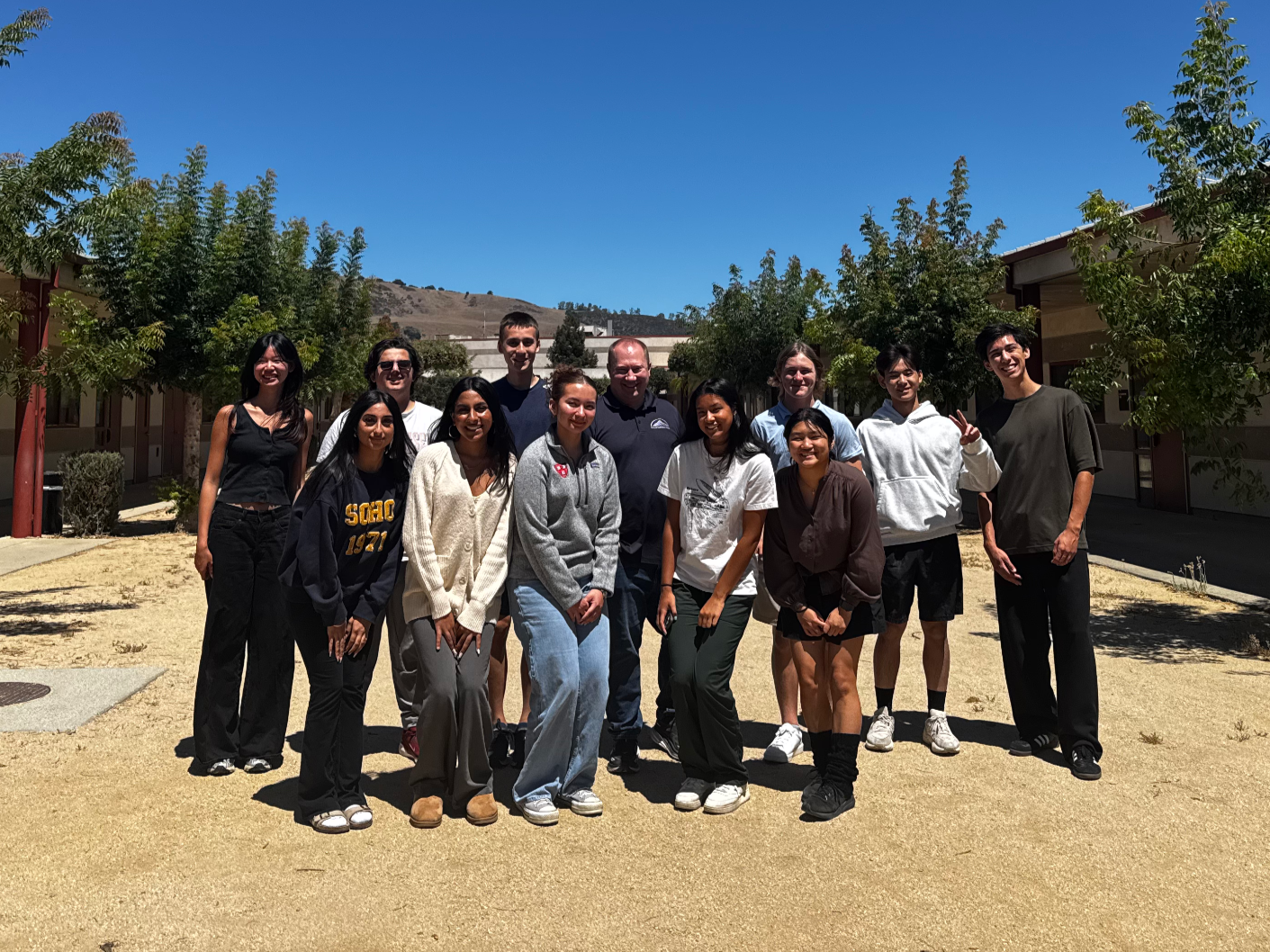
In Morgan Hill, climate action is becoming part of the city's civic fabric, shaped not only by planners and policy documents but also by the students who live in the neighborhoods these plans are meant to serve.
Located at the southern edge of Silicon Valley in Santa Clara County, Morgan Hill is a Northern California community with agricultural roots, nearby open space, and suburban growth shaped by the region's broader economy. As the city plans for future growth, housing, transportation, public health, and climate resilience are deeply connected to the daily experiences of residents.
Through Climate Action Pathways for Schools (CAPS), students at Morgan Hill Unified School District are working alongside the City of Morgan Hill to advance Healthy Neighborhoods for All, a new initiative in the city's long-term planning framework focused on health, environmental justice, and climate resilience.
For CAPS interns, the project gives them a direct role in shaping how their community responds to climate impacts and environmental inequities, connecting classroom learning with real decisions about housing, transportation, open space, pollution, food access, and public health.
Students Practicing Sustainable Governance
The partnership between CAPS and Morgan Hill began when city planner Adam Paszkowski learned about CAPS's work with school districts and saw alignment with the city's goals around climate change, pollution, public health, and community resilience. He reached out to CAPS Executive Director Kirk Anne Taylor to explore how students could be part of the work.
That connection placed students inside Morgan Hill's General Plan community planning process, including Healthy Neighborhoods for All. Rather than learning about sustainability as an abstract concept, students reviewed the policies and public processes that would shape Morgan Hill's approach to environmental justice and climate resilience.
As part of the Healthy Neighborhoods for All initiative, CAPS students reviewed seven policy areas: pollution and air quality; affordable, healthy food access; safe, healthy homes; public facilities; inclusive engagement; physical activity; and overall health.
Their work was practical, detailed, and tied to real outcomes. Students analyzed draft policies, compared Morgan Hill's approach with examples from other cities, developed presentations, and shared recommendations with Adam and the city planning team. The policies they helped revise were successfully passed as part of Morgan Hill's community planning process.
For Makayla Brinquis, a senior at Ann Sobrato High School, seeing the students' recommendations move forward made the impact of the work tangible.
“Through my group's hard work, we were able to accomplish a lasting goal for our community,” Makayla said. “The goals that were passed include helping underserved communities get resources to improve their quality of life.”
For Mariana Miranda, program manager with CAPS, the partnership gave students the kind of experience that is central to CAPS's model, working on real projects with real partners, real deliverables, and real community stakes.
“This partnership has given a very meaningful experience to students to not only learn about sustainable governance, but actively practice it,” she said.
Why Youth Perspective Matters
For Adam, one of the most important contributions students brought was their perspective as young people living in Morgan Hill.
“Typically in city government, we don't have our students involved,” Adam said. “There's that disconnect.”
CAPS helped close that gap. Students experience the city differently from many adults. They bike, walk, rely on family transportation, use parks, and notice barriers that can be easy to overlook in a formal planning process.
“The key thing was getting the younger generation's perspective,” Adam said. “They view things differently. They have a different viewpoint on the city.”
That perspective matters because the policies adopted today will shape the Morgan Hill students inherit as adults. Their input helped ground the work in the daily realities of young people who will live with the outcomes of these decisions for years to come.
Students brought research, as well as lived experience. They could see how climate risks show up in their own routes, neighborhoods, and routines.
For Mariana, that connection between personal experience and policy stood out during the students' work on the Safety, Services, and Infrastructure Element, the part of the city's planning framework that addresses public services, infrastructure, and preparedness for climate hazards such as extreme heat, flooding, drought, and wildfire. She recalled one intern who connected directly with the extreme heat data because he biked through one of the areas being studied.
A City Planning Process Rooted in Health, Equity, and Climate Resilience
Healthy Neighborhoods for All responds to the California Planning for Healthy Communities Act, also known as SB 1000, which requires cities and counties with disadvantaged communities to include environmental justice goals in their general plans. In Morgan Hill, those goals focus on reducing exposure to pollution, expanding access to healthy food, supporting safe housing, and encouraging physical activity.
To identify where those goals were most needed, the city analyzed more than 40 indicators related to pollution, climate impacts, health, food access, housing, transportation, income, and resource availability. The analysis identified neighborhoods where lower-income Hispanic and Latino communities faced disproportionate burdens. The City of Morgan Hill identified these areas as “Opportunity Neighborhoods,” where residents face greater environmental and health burdens and fewer resources to address them.
Through outreach, the city heard from residents who wanted clearer information, stronger access to local resources, and community events designed around real needs.
CAPS interns helped carry that work into the next stage. Students reviewed the proposed Healthy Neighborhoods for All goals, policies, and actions; researched how other cities were addressing similar issues; studied local data; and helped strengthen and make the city's draft policies more actionable.
They also helped bring the process back to the community. CAPS interns organized and led a workshop at the Centennial Recreation Center, where residents could learn about the proposed plan, ask questions, and offer input before the plan moved to the Planning Commission and City Council.
The interns also attended Planning Commission and City Council meetings, where they voiced support for the project and provided public comment. Their involvement helped residents understand the planning process and kept community priorities visible as the policies moved toward approval.
For Diya Chauhan, a senior at Ann Sobrato High School who plans to study public health, participating in that process offered experience that extended beyond what could be learned in a classroom.
“Through CAPS, I gained firsthand experience working in public health policy,” Diya said. “Being able to collaborate with students and the City of Morgan Hill staff on tangible initiatives gave me insight into the kind of professional field I will head into.”
Building Skills Across City Planning Projects
CAPS interns' work with the City of Morgan Hill extended beyond the Healthy Neighborhoods for All initiative. Students also contributed to the Natural Resources and Environment Element and the Safety, Services, and Infrastructure Element, connecting environmental justice to wider city efforts around open space, climate resilience, rewilding, extreme heat, flooding, drought, and wildfire.
For the Natural Resources and Environment Element, students drafted recommendations focused on equitable access to parks and open space, climate-smart infrastructure, native vegetation, urban heat reduction, and community education. For the Safety, Services, and Infrastructure Element, students assisted with a climate change vulnerability assessment focused on extreme heat, flooding, drought, and wildfire.
Across these projects, students saw how climate action moves through many parts of city life. Clean air, safe homes, food access, parks, transportation, public health, emergency planning, and environmental justice are connected conditions that shape whether a neighborhood is healthy, safe, and resilient.
They also gained practical workplace skills, including research, policy analysis, public speaking, collaboration, time management, and community engagement. During the spring semester, Adam met with students every week, supporting their learning and guiding their project work.
Anish Muralidharan, a senior at Live Oak High School, identified leadership and communication as two of the most important skills developed through the internship.
“Taking a leadership role and being communicative with my teammates was an important skill that I learned throughout this internship,” Anish said.
Mariana hopes students leave the experience with a deeper understanding of their capacity to contribute.
“I hope they take away technical skills, soft skills, but most importantly, I hope they know that the work that they have done through CAPS has directly impacted their community and helped it become more climate resilient,” she said.